Tel/WhatsApp
0086 135 2661 5783

Henan Jinrui Food Engineering Co., Ltd

In the main production regions for High Quality Cassava Flour (HQCF)—Africa, Southeast Asia, and Latin America—growing demand from food processing, baking, and export markets has turned HQCF into a high-value segment of the agricultural processing industry. For those considering entering this business, having a clear understanding of equipment costs and the payback period is essential for assessing feasibility and managing investment risks.
Today, Henan Jinrui, as a professional manufacturer of cassava processing equipment, will walk you through a systematic analysis of HQCF processing equipment pricing and the investment payback cycle.
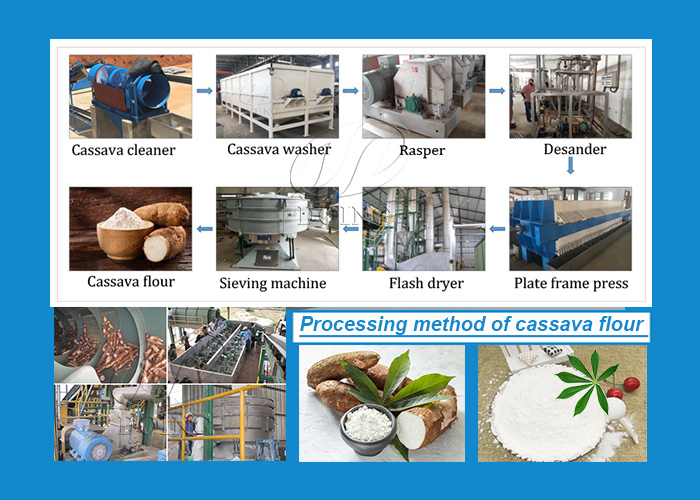 Cassava flour processing machine
A standard full-process HQCF line includes washing, peeling, grating, dewatering, drying, sieving, and packaging. Prices vary mainly by daily capacity, automation level, material, and configuration. The following is a price range table for high-quality cassava flour processing machinery of common scales.
| Scale Capacity (fresh cassava/day) | Price Range | Best Suited For |
| Small-scale 0–4 tons | $3,000–$25,000 | Family workshops, small-scale producers |
| Medium-scale 4–20 tons | $40,000–$250,000 | Small and medium enterprises |
| Large-scale 20+ tons | $250,000+ | Large export-oriented factories |
- Small-scale lines feature simple operation and low energy use but require more manual labor.
- Medium-scale lines come with PLC control, closed conveying devices, delivering stable cassava flour quality and higher extraction rates.
- Large-scale lines are built with full stainless steel and advanced drying systems, supporting continuous production and meeting international HQCF quality standards.
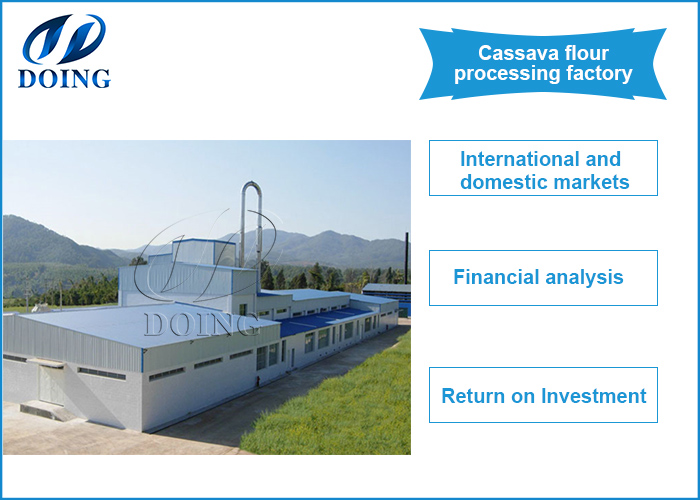 HQCF processing business
Above, we looked at the price range of cassava flour processing equipment and gained a basic understanding of the investment cost. For most investors, the next key question is: How long will it take to recover my investment? In other words, what is the payback period?
Let’s walk through a real-world example.
In Africa or Southeast Asia, a medium-scale HQCF production line typically requires a total investment of around $180,000, covering equipment, transportation, installation, and training. With an input of 10 tons of fresh cassava per day, the line produces approximately 2.5 tons of HQCF daily.
According to Tridge, a global agricultural data and trading platform, the wholesale price of HQCF is about $0.7 per kilogram, or $700 per ton.
Based on this, the financial performance is as follows:
Daily revenue: 2.5 tons × $700/ton = $1,750
Daily cost (raw materials + processing): approximately $1,100
Daily net profit (after depreciation and operating expenses): approximately $530
With 300 operating days per year, the annual net profit reaches approximately $159,000.
This means you can recover the $180,000 investment in about 13 to 14 months—significantly faster than the two-year target most investors typically expect.
In short, as long as raw material supply is stable and the line operates consistently, a medium-scale HQCF production line can pay for itself in just over one year.
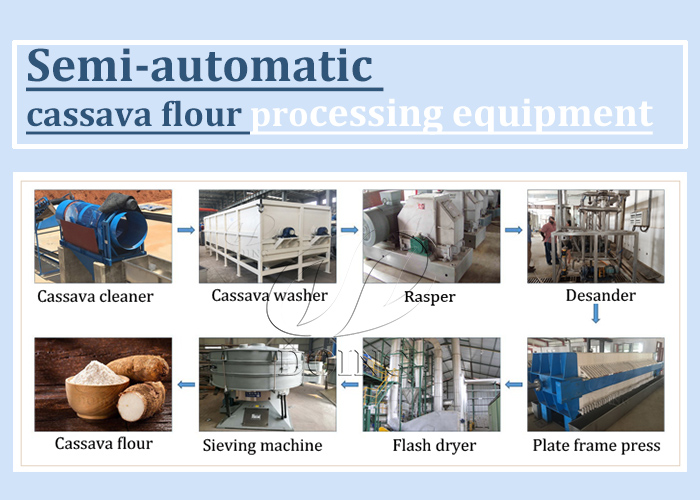 Automatic cassava flour processing plant
While the data above shows the strong potential of an HQCF processing business, actual returns depend largely on the following three key factors:
① Automation Level and Equipment Material
Using stainless steel equipment and a fully automated cassava flour production line helps improve product quality and reduce labor costs, but it also increases the initial investment by 20% to 50%. It is recommended to choose the configuration that best suits your target market and local labor availability.
② Stability of Raw Material Supply
Cassava accounts for more than half of the total operating costs in an HQCF business. Establishing a stable and reliable local supply chain is essential—unstable raw material supply will significantly extend the payback period.
③ Capacity Utilization Rate
Maintaining a capacity utilization rate of 70% or higher is critical to ensuring a healthy return on investment. Cassava flour processing machine underutilization is the most common factor that prolongs the payback period.
Investing in high-quality cassava processing equipment offers significant economic benefits and a short payback period. Small-to-medium-scale cassava flour production lines strike an optimal balance between cost and return; under normal market conditions, the initial investment can typically be recouped within 1 to 2 years.
If you are planning to launch an HQCF processing business, please contact Henan Jinrui—we will help you find the right equipment solution!
 How Many Tons of Potatoes Make 1 Ton of Starch? How to Start a Profitable Potato Starch Processing Business?
How Much Space for a 5tph Cassava Starch Processing Plant? Complete Factory Layout & Setup Guide
What Is the Market Price of Cassava Flour and Is Cassava Flour Processing Profitable?
From Fresh Cassava to Cassava Flour: A Complete Dry Process
Can cassava flour processing be a profitable alternative to wheat flour?
Is the Fufu Flour Processing Business Profitable?
Why Is the HQCF (High Quality Cassava Flour) Processing Business So Popular in Nigeria?
What Budget Is Required to Start a Cassava Flour Production Business in Congo?
What Is The Cost of Potato Starch Production Plant In India?
Cut Costs by 30% with the 2-in-1 Garri and Cassava Flour Processing Line
Henan Jinrui Secures 2-in-1 Processing Line Project for Garri and Cassava Flour Production in Gabon
Henan Jinrui delivers attieke processing equipment to the customer in Côte d'Ivoire
Henan Jinrui Successfully Ships Cassava Flour Processing Line to Madagascar Client
Henan Jinrui Advanced Cassava Starch Processing Equipment Wins Over Nigerian Food Processor
Henan Jinrui Delivers Custom 1TPD Garri & Attieke Making Equipment to Benin
How Many Tons of Potatoes Make 1 Ton of Starch? How to Start a Profitable Potato Starch Processing Business?
How Much Space for a 5tph Cassava Starch Processing Plant? Complete Factory Layout & Setup Guide
What Is the Market Price of Cassava Flour and Is Cassava Flour Processing Profitable?
From Fresh Cassava to Cassava Flour: A Complete Dry Process
Can cassava flour processing be a profitable alternative to wheat flour?
Is the Fufu Flour Processing Business Profitable?
Why Is the HQCF (High Quality Cassava Flour) Processing Business So Popular in Nigeria?
What Budget Is Required to Start a Cassava Flour Production Business in Congo?
What Is The Cost of Potato Starch Production Plant In India?
Cut Costs by 30% with the 2-in-1 Garri and Cassava Flour Processing Line
Henan Jinrui Secures 2-in-1 Processing Line Project for Garri and Cassava Flour Production in Gabon
Henan Jinrui delivers attieke processing equipment to the customer in Côte d'Ivoire
Henan Jinrui Successfully Ships Cassava Flour Processing Line to Madagascar Client
Henan Jinrui Advanced Cassava Starch Processing Equipment Wins Over Nigerian Food Processor
Henan Jinrui Delivers Custom 1TPD Garri & Attieke Making Equipment to Benin
DOING company offers cassava processing machine from single machine to the complete production line. If you want to get more details about High Quality Cassava Flour (HQCF) Processing Machine Price And Payback Period , please contact us: