Tel/WhatsApp
0086 135 2661 5783

Henan Jinrui Food Engineering Co., Ltd

Building a potato starch manufacturing plant is a strategic move for businesses looking to process potatoes into a valuable product. This article will guide you through the essential steps, machinery, and cost breakdown of establishing a potato starch production line, with insights into Henan Jinrui's fully automatic solutions that range from 2 to 20 tons of raw potato input per hour.
1. Overview of the Potato Starch Production Process
Potato starch production is a mechanical process that extracts starch from potatoes using water and physical forces. The process typically involves several key stages:
Raw potato sieving and washing: Potatoes are first cleaned to remove dirt, stones, and impurities.
Cutting and rasping: Potatoes are crushed to release starch from the cell walls.
Starch extraction and separation: The starch is separated from the fiber and other components.
Washing and refining: The starch is washed to remove soluble proteins and other impurities.
Dewatering and drying: The final potato starch slurry is dewatered, then dried to achieve the desired moisture content.
Packaging and storage: The finished product is packaged for distribution.
Each of these stages must be optimized for efficient operation and maximum starch recovery.
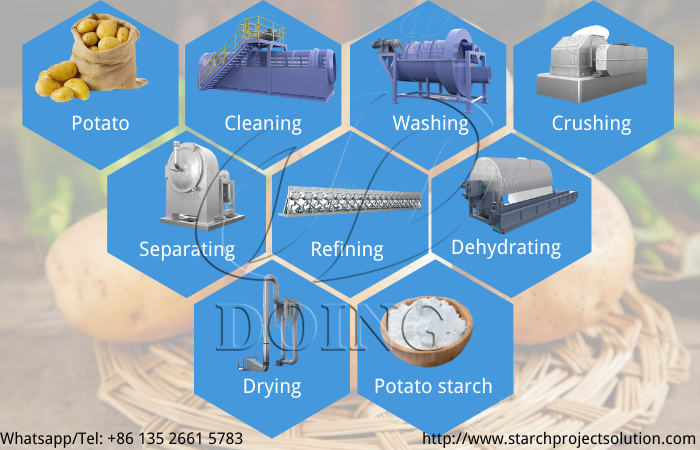 Potato starch production process
2. Key Steps in Building a Potato Starch Manufacturing Plant
Step 1: Planning the Capacity
The first consideration is the production capacity, usually defined by how many tons of raw potatoes the plant will process per hour. Potato starch manufacturing plants typically operate with capacities ranging from 2 to 20 tons per hour (TPH). The capacity will determine the size of the equipment, water and energy consumption, and overall plant layout.
Henan Jinrui offers fully automatic lines with a capacity range of 2–20 TPH, providing solutions for both small-scale and large-scale production.
Step 2: Process Design and Layout
A well-designed plant layout is critical for improving workflow and reducing operating costs. The layout should ensure:
Efficient movement of materials from one stage to the next
Separation of wet and dry processing areas to avoid contamination
Space for future expansion
Easy access for maintenance and cleaning
A good process design will also ensure water and energy efficiency, as well as meet food-grade safety standards.
Step 3: Machinery Selection
A full-scale potato starch manufacturing line includes several essential pieces of equipment. Each machine must be chosen for its ability to perform at high efficiency and deliver consistent product quality.
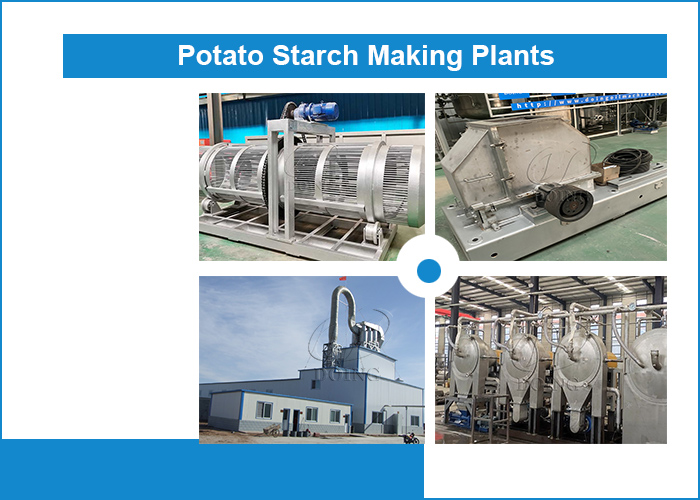 potato starch manufacturing machines
Dry Sieve and Rotary Washer: The first step in the process is cleaning the raw potatoes to remove dirt, stones, and other contaminants. This equipment ensures that only clean potatoes enter the potato starch production line, protecting downstream machinery.
Rasper: This machine crushes the potatoes into small particles, releasing starch from the cells. The efficiency of the rasper directly affects the amount of starch extracted.
Starch Extraction System(Centrifuge Sieve): This system typically consists of centrifugal separators or screens that separate starch from the pulp. The process often involves multiple stages to ensure thorough extraction and to minimize the loss of starch.
18 Stages Hydrocyclone Station: This stage involves washing the extracted starch to remove any residual impurities, proteins, or fibers. The result is high-quality, purified starch.
Peeler Centrifuge: After washing, the starch slurry is concentrated using dewatering equipment, which reduces moisture content and prepares it for drying.
Flash Dryer : Drying the starch to the appropriate moisture level (typically 12-14%) is crucial. Flash or airflow dryers are used to rapidly remove moisture without compromising the starch’s quality.
Control System: A PLC-based control system is essential for automating the process and ensuring stable operation, allowing for remote monitoring and minimal human intervention.
Henan Jinrui’s fully automatic production lines integrate all of these systems, ensuring seamless operation and maximizing starch yield with minimal energy and labor costs.
3. Cost Breakdown of a Potato Starch Manufacturing Plant
The overall investment for building a potato starch manufacturing plant will vary based on several factors such as production capacity, the level of automation, and local conditions like water and electricity costs. Here's a general breakdown of costs:
For a fully automatic potato starch production line with capacities ranging from 2 to 20 tons of raw potatoes per hour, the total investment can range between USD 250,000 and USD 600,000. This price range includes the main processing equipment and control systems but does not cover construction, water treatment, boiler installation, or labor costs. These additional expenses will vary based on your location and specific plant requirements.
Investing in a fully automatic production line helps reduce labor costs, improve product consistency, and enhance overall production efficiency, making it a cost-effective choice for processors seeking high-quality, large-scale potato starch production.
Building a potato starch manufacturing plant requires careful planning, investment in the right machinery, and understanding of the production process. With a 2–20 tons per hour fully automatic production line from Henan Jinrui, businesses can ensure high efficiency, stable production, and significant return on investment. If you'd like to discuss further, feel free to reach out for tailored advice based on your business needs.
 Cassava Flour Milling in Thailand: Process, Equipment, and Throughput
How Many Tons of Potatoes Make 1 Ton of Starch? How to Start a Profitable Potato Starch Processing Business?
How Much Space for a 5tph Cassava Starch Processing Plant? Complete Factory Layout & Setup Guide
What Is the Market Price of Cassava Flour and Is Cassava Flour Processing Profitable?
From Fresh Cassava to Cassava Flour: A Complete Dry Process
Can cassava flour processing be a profitable alternative to wheat flour?
Is the Fufu Flour Processing Business Profitable?
Why Is the HQCF (High Quality Cassava Flour) Processing Business So Popular in Nigeria?
What Budget Is Required to Start a Cassava Flour Production Business in Congo?
What Is The Cost of Potato Starch Production Plant In India?
Henan Jinrui Secures 2-in-1 Processing Line Project for Garri and Cassava Flour Production in Gabon
Henan Jinrui delivers attieke processing equipment to the customer in Côte d'Ivoire
Henan Jinrui Successfully Ships Cassava Flour Processing Line to Madagascar Client
Henan Jinrui Advanced Cassava Starch Processing Equipment Wins Over Nigerian Food Processor
Henan Jinrui Delivers Custom 1TPD Garri & Attieke Making Equipment to Benin
Cassava Flour Milling in Thailand: Process, Equipment, and Throughput
How Many Tons of Potatoes Make 1 Ton of Starch? How to Start a Profitable Potato Starch Processing Business?
How Much Space for a 5tph Cassava Starch Processing Plant? Complete Factory Layout & Setup Guide
What Is the Market Price of Cassava Flour and Is Cassava Flour Processing Profitable?
From Fresh Cassava to Cassava Flour: A Complete Dry Process
Can cassava flour processing be a profitable alternative to wheat flour?
Is the Fufu Flour Processing Business Profitable?
Why Is the HQCF (High Quality Cassava Flour) Processing Business So Popular in Nigeria?
What Budget Is Required to Start a Cassava Flour Production Business in Congo?
What Is The Cost of Potato Starch Production Plant In India?
Henan Jinrui Secures 2-in-1 Processing Line Project for Garri and Cassava Flour Production in Gabon
Henan Jinrui delivers attieke processing equipment to the customer in Côte d'Ivoire
Henan Jinrui Successfully Ships Cassava Flour Processing Line to Madagascar Client
Henan Jinrui Advanced Cassava Starch Processing Equipment Wins Over Nigerian Food Processor
Henan Jinrui Delivers Custom 1TPD Garri & Attieke Making Equipment to Benin
DOING company offers cassava processing machine from single machine to the complete production line. If you want to get more details about How to Build a Potato Starch Manufacturing Plant: Steps, Machinery & Cost Breakdown , please contact us: