Tel/WhatsApp
0086 135 2661 5783

Henan Jinrui Food Engineering Co., Ltd

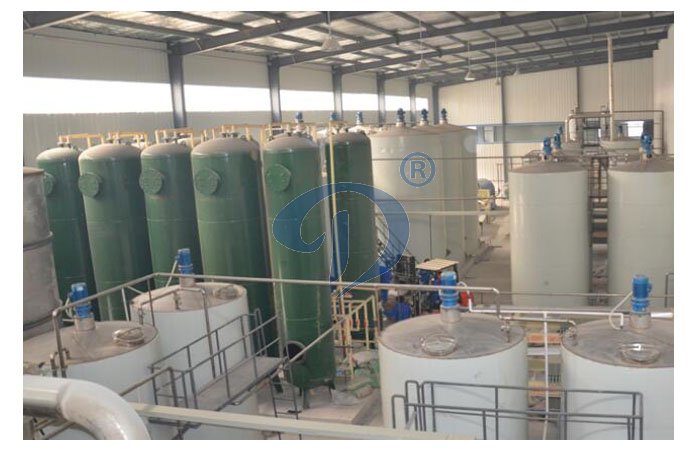
glucose syrup processing
High Fructose Starch-based Syrups are produced from refined very high DE glucose syrups. An enzymatic process using isomerase fixated on a resin facilitates the conversion of glucose to fructose. By using more resin columns in parallel the enzyme activity is completely exhausted before a refill.
The isomerase catalyses the formation of 42% fructose in equilibrium with glucose. This syrup may be refined and evaporated as such and it is an excellent all-purpose sweetener.
In order to obtain a more perfect match with sucrose based liquid sugar (cane and beet sugar) the fructose content has to be increased to 55% by enrichment. A stream of HFSS-42 is fractionated. Previous attempts to do this by crystallisation have never gained industrial acceptance. The fractionation is done more elegantly by chromatography. By auto-matically switching the injection point an endless ring column is simulated and the HFSS-42 is fractionated in fructose and glucose. Water or condensate is used to eluate the column. The fructose fraction is backmixed with the HFSS-42 to make up an HFFS-55. In this way a perfect match with traditional sucrose based liquid sugar is obtained. The HFSS-55 finds widespread use as sweetener in soft drinks.
The fructose fraction from the chromatographic column can of course be refined and evaporated to a syrup separately as HFSS-90 finding applications in low calorie foods.
Demineralisation throughout the HFSS-process and precautions against de-cross-linking by oxygen extends the lifetime of the resins. An HFSS-section should preferably run continuously non-stop.
 How Many Tons of Potatoes Make 1 Ton of Starch? How to Start a Profitable Potato Starch Processing Business?
How Much Space for a 5tph Cassava Starch Processing Plant? Complete Factory Layout & Setup Guide
What Is the Market Price of Cassava Flour and Is Cassava Flour Processing Profitable?
From Fresh Cassava to Cassava Flour: A Complete Dry Process
Can cassava flour processing be a profitable alternative to wheat flour?
Is the Fufu Flour Processing Business Profitable?
Why Is the HQCF (High Quality Cassava Flour) Processing Business So Popular in Nigeria?
What Budget Is Required to Start a Cassava Flour Production Business in Congo?
What Is The Cost of Potato Starch Production Plant In India?
Cut Costs by 30% with the 2-in-1 Garri and Cassava Flour Processing Line
Henan Jinrui Secures 2-in-1 Processing Line Project for Garri and Cassava Flour Production in Gabon
Henan Jinrui delivers attieke processing equipment to the customer in Côte d'Ivoire
Henan Jinrui Successfully Ships Cassava Flour Processing Line to Madagascar Client
Henan Jinrui Advanced Cassava Starch Processing Equipment Wins Over Nigerian Food Processor
Henan Jinrui Delivers Custom 1TPD Garri & Attieke Making Equipment to Benin
How Many Tons of Potatoes Make 1 Ton of Starch? How to Start a Profitable Potato Starch Processing Business?
How Much Space for a 5tph Cassava Starch Processing Plant? Complete Factory Layout & Setup Guide
What Is the Market Price of Cassava Flour and Is Cassava Flour Processing Profitable?
From Fresh Cassava to Cassava Flour: A Complete Dry Process
Can cassava flour processing be a profitable alternative to wheat flour?
Is the Fufu Flour Processing Business Profitable?
Why Is the HQCF (High Quality Cassava Flour) Processing Business So Popular in Nigeria?
What Budget Is Required to Start a Cassava Flour Production Business in Congo?
What Is The Cost of Potato Starch Production Plant In India?
Cut Costs by 30% with the 2-in-1 Garri and Cassava Flour Processing Line
Henan Jinrui Secures 2-in-1 Processing Line Project for Garri and Cassava Flour Production in Gabon
Henan Jinrui delivers attieke processing equipment to the customer in Côte d'Ivoire
Henan Jinrui Successfully Ships Cassava Flour Processing Line to Madagascar Client
Henan Jinrui Advanced Cassava Starch Processing Equipment Wins Over Nigerian Food Processor
Henan Jinrui Delivers Custom 1TPD Garri & Attieke Making Equipment to Benin
DOING company offers cassava processing machine from single machine to the complete production line. If you want to get more details about What is High Fructose Starch-based Syrups? , please contact us: