Tel/WhatsApp
0086 135 2661 5783

Henan Jinrui Food Engineering Co., Ltd

 Home>FAQ>Garri Processing vs. Cassava Starch Processing: Which is More Profitable and Easier to Start?
For entrepreneurs and communities looking to enter the cassava value chain, garri and cassava starch processing are two profitable pathways, however, they differ dramatically in their start-up requirements, operational complexity, and market dynamics. This article will analyze which one offers greater profitability under different conditions.
What is the difference between garri and cassava starch processing?
The difference between garri and cassava starch processing lies in complexity, scale, and precision.
1. Garri Processing:
This is a more straightforward, primarily mechanical process.
Steps: Cleaning-Washing-Peeling → Grating (to pulp) → Fermentation & Dewatering (in bags) → Pulverizing (fermented cake) → Frying/Roasting (in a garri fryer) → Sieving→ Cooling & Packaging.
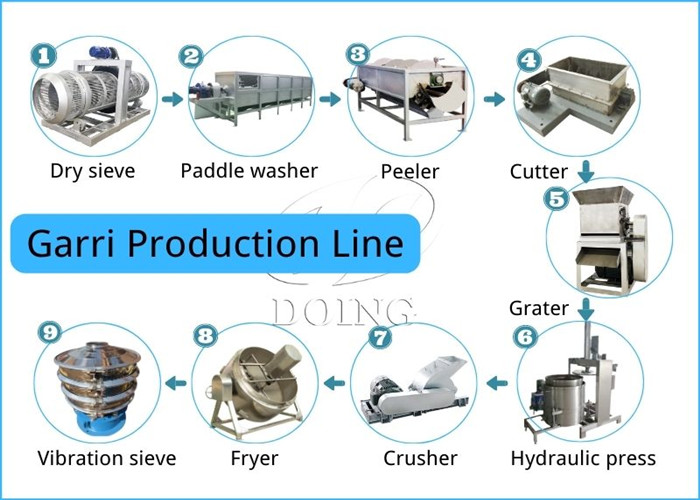 garri processing
Technology Needs: Relatively simple machines dominate: a motorized grater, a hydraulic or screw press for dewatering, and a crucial garri frying machine. The process tolerates some manual intervention. Water usage is moderate, primarily for cleaning.
Core Skill: The expertise lies in controlling fermentation (for taste/sourness) and, most critically, the roasting technique, which determines final color, dryness, and shelf-life.
2. Cassava Starch Processing
This is a wet-milling, extraction, and purification process focused on purity and yield.
Steps: Cleaning & Washing → Rasping (using a rasper) → Separation & Purification (through centrifuges, hydrocyclone units, and sieves) → Dehydration (with a peeler centrifuge) → Drying (flash or rotary dryer) → Cooling & Packaging.
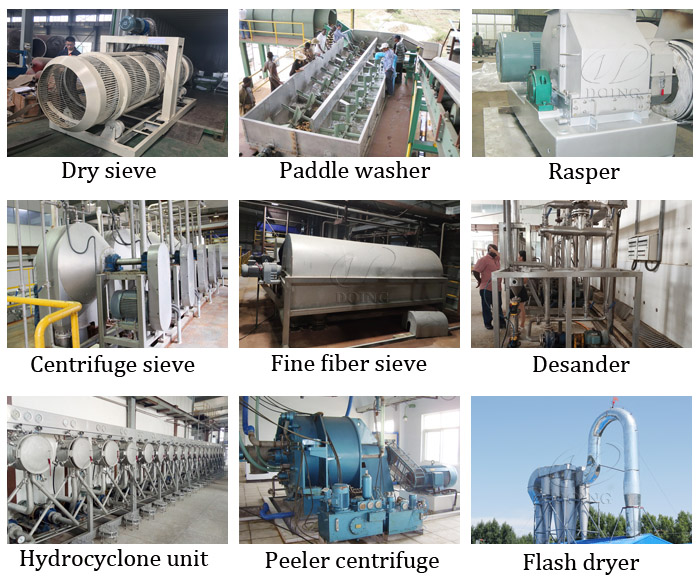 cassava starch processing
Technology Needs: Requires a more integrated, capital-intensive plant. Key units are high-capacity raspers, fine sieving stations, hydrocyclone systems for purification, and industrial flash dryers. The process is highly water-intensive and requires efficient wastewater management.
Core Skill: Focuses on maximizing starch extraction rate (typically 15-25% of root weight) and achieving high brightness (whiteness) and low impurity, which are critical for industrial buyers.
What is the profitability & market analysis of garri and cassava starch processing?
Garri Processing:
Market: Huge, consistent, and localized. You sell directly to consumers or retailers. Branding (premium white or yellow garri) can command higher prices.
Profit Driver: Operational efficiency, quality consistency, and direct distribution. Margins are reliable but per-unit value is lower than starch. Profit scales with volume and market reach.
Return on Investment: Faster. Due to lower startup costs, you can break even and become profitable relatively quickly.
Cassava Starch Processing:
Market: Industrial and export-oriented. Buyers are large-scale food companies, glue factories, etc. Prices are tied to international starch markets (wheat, corn starch).
Profit Driver: Scale, Scale, Scale. Profitability hinges on high-volume production, maximizing extraction yield, and achieving premium-grade quality to access better-paying markets.
Return on Investment: Slower but potentially higher. The initial investment is significant, and achieving consistent, high-grade output is necessary to secure large off-take agreements that deliver substantial returns.
Which is Easier to Start?
Garri Processing is undoubtedly easier to start. You can begin with a minimal setup—even semi-manually—and scale up gradually as your market grows. The machinery is more affordable, the technology is less intimidating, and the learning curve is manageable. It's perfect for smallholder farmers, cooperatives, and first-time entrepreneurs.
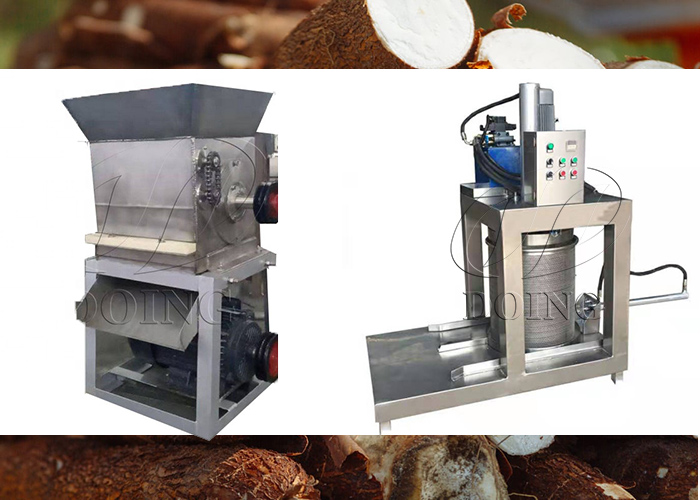 small garri processing machine
Cassava Starch Processing has a much higher barrier to entry. It demands a significant upfront capital investment in plant and equipment, a reliable supply of large quantities of fresh cassava, a consistent water source, and a plan for waste (effluent) treatment. It requires more technical knowledge to operate and maintain the plant effectively.
Recommendations from Henan Jinrui:
For individuals & small cooperatives: Start with garri processing. Invest in incremental mechanization (e.g., a mechanical fryer, hydraulic press) to improve productivity and quality. Explore niche markets like premium-quality or fortified garri.
For investors & larger agribusinesses: Consider cassava starch if you can secure capital, technical partnerships, and guaranteed off-take agreements with industrial buyers. Conduct a meticulous feasibility study focused on extraction yield and production cost.
For development agencies: Support garri processors with improved technology and credit access to boost rural incomes. For starch, foster public-private partnerships and pilot innovative, lower-cost models like mobile processing units to de-risk investment.
If you want to know more about garri and cassava starch processing, you can tell us your capacity, budget, and targeted terminal market. With 14-year experience in providing garri and cassava starch processing solutions, we can help you to make a feasibility analysis and a precise decision!
 Tapioca Starch Plant Upgrade: How Can I Increase Production Capacity?
Cassava Flour Milling in Thailand: Process, Equipment, and Throughput
How Many Tons of Potatoes Make 1 Ton of Starch? How to Start a Profitable Potato Starch Processing Business?
How Much Space for a 5tph Cassava Starch Processing Plant? Complete Factory Layout & Setup Guide
What Is the Market Price of Cassava Flour and Is Cassava Flour Processing Profitable?
From Fresh Cassava to Cassava Flour: A Complete Dry Process
Can cassava flour processing be a profitable alternative to wheat flour?
Is the Fufu Flour Processing Business Profitable?
Why Is the HQCF (High Quality Cassava Flour) Processing Business So Popular in Nigeria?
What Budget Is Required to Start a Cassava Flour Production Business in Congo?
Henan Jinrui Secures 2-in-1 Processing Line Project for Garri and Cassava Flour Production in Gabon
Henan Jinrui delivers attieke processing equipment to the customer in Côte d'Ivoire
Henan Jinrui Successfully Ships Cassava Flour Processing Line to Madagascar Client
Henan Jinrui Advanced Cassava Starch Processing Equipment Wins Over Nigerian Food Processor
Henan Jinrui Delivers Custom 1TPD Garri & Attieke Making Equipment to Benin
Tapioca Starch Plant Upgrade: How Can I Increase Production Capacity?
Cassava Flour Milling in Thailand: Process, Equipment, and Throughput
How Many Tons of Potatoes Make 1 Ton of Starch? How to Start a Profitable Potato Starch Processing Business?
How Much Space for a 5tph Cassava Starch Processing Plant? Complete Factory Layout & Setup Guide
What Is the Market Price of Cassava Flour and Is Cassava Flour Processing Profitable?
From Fresh Cassava to Cassava Flour: A Complete Dry Process
Can cassava flour processing be a profitable alternative to wheat flour?
Is the Fufu Flour Processing Business Profitable?
Why Is the HQCF (High Quality Cassava Flour) Processing Business So Popular in Nigeria?
What Budget Is Required to Start a Cassava Flour Production Business in Congo?
Henan Jinrui Secures 2-in-1 Processing Line Project for Garri and Cassava Flour Production in Gabon
Henan Jinrui delivers attieke processing equipment to the customer in Côte d'Ivoire
Henan Jinrui Successfully Ships Cassava Flour Processing Line to Madagascar Client
Henan Jinrui Advanced Cassava Starch Processing Equipment Wins Over Nigerian Food Processor
Henan Jinrui Delivers Custom 1TPD Garri & Attieke Making Equipment to Benin
DOING company offers cassava processing machine from single machine to the complete production line. If you want to get more details about Garri Processing vs. Cassava Starch Processing: Which is More Profitable and Easier to Start? , please contact us: