Tel/WhatsApp
0086 135 2661 5783

Henan Jinrui Food Engineering Co., Ltd

Cassava flour is gaining momentum as a “go-to” gluten-free, grain-free flour. And it’s not surprising when you consider that those who follow restricted diets typically have to blend several flours to achieve the same consistency as wheat flour.
While sometimes the terms cassava flour and tapioca flour are used interchangeably, there are in fact distinct differences. Tapioca is a starch extracted from the cassava root through a process of washing and pulping. The wet pulp is then squeezed to extract a starchy liquid. Once all the water evaporates from the starchy liquid, the tapioca flour remains.
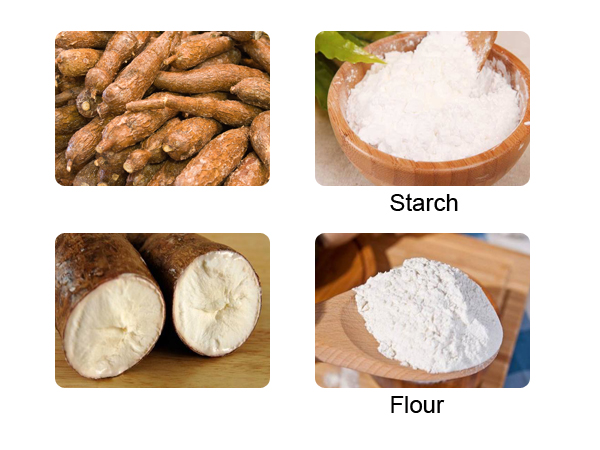 Cassava flour VS tapioca flour
Alternatively, cassava flour is the whole root, simply peeled, dried and ground. This means it has more dietary fiber than tapioca flour – and allows me to make cassava flour tortillas, which would not be possible with tapioca flour.
Cassava is mainly distributed in Africa, which is an important source of edible amylum. Besides, the cassava can be engaged in producing various products of cassava starch, cassava flour, cassava pellet, cassava juice, cassava chips through cassava milling machines. Our company will be able to help entrepreneurs to build cassava flour or starch processing plant. We will provide project execution, profit and market analysis, cassava processing facilities and equipments and so on. We have much experience and advanced technique as our important foundation.
The roots of cassava are the major constraint, which deteriorate rapidly. Cassava roots have 24-48 hours shelf-life after harvest, so the roots have to be processed within 2 to 3 days from harvest. This processing requires equipments for peeling, grating, boiling, fermenting, drying, frying and milling.
 How Many Tons of Potatoes Make 1 Ton of Starch? How to Start a Profitable Potato Starch Processing Business?
How Much Space for a 5tph Cassava Starch Processing Plant? Complete Factory Layout & Setup Guide
What Is the Market Price of Cassava Flour and Is Cassava Flour Processing Profitable?
From Fresh Cassava to Cassava Flour: A Complete Dry Process
Can cassava flour processing be a profitable alternative to wheat flour?
Is the Fufu Flour Processing Business Profitable?
Why Is the HQCF (High Quality Cassava Flour) Processing Business So Popular in Nigeria?
What Budget Is Required to Start a Cassava Flour Production Business in Congo?
What Is The Cost of Potato Starch Production Plant In India?
Cut Costs by 30% with the 2-in-1 Garri and Cassava Flour Processing Line
Henan Jinrui Secures 2-in-1 Processing Line Project for Garri and Cassava Flour Production in Gabon
Henan Jinrui delivers attieke processing equipment to the customer in Côte d'Ivoire
Henan Jinrui Successfully Ships Cassava Flour Processing Line to Madagascar Client
Henan Jinrui Advanced Cassava Starch Processing Equipment Wins Over Nigerian Food Processor
Henan Jinrui Delivers Custom 1TPD Garri & Attieke Making Equipment to Benin
How Many Tons of Potatoes Make 1 Ton of Starch? How to Start a Profitable Potato Starch Processing Business?
How Much Space for a 5tph Cassava Starch Processing Plant? Complete Factory Layout & Setup Guide
What Is the Market Price of Cassava Flour and Is Cassava Flour Processing Profitable?
From Fresh Cassava to Cassava Flour: A Complete Dry Process
Can cassava flour processing be a profitable alternative to wheat flour?
Is the Fufu Flour Processing Business Profitable?
Why Is the HQCF (High Quality Cassava Flour) Processing Business So Popular in Nigeria?
What Budget Is Required to Start a Cassava Flour Production Business in Congo?
What Is The Cost of Potato Starch Production Plant In India?
Cut Costs by 30% with the 2-in-1 Garri and Cassava Flour Processing Line
Henan Jinrui Secures 2-in-1 Processing Line Project for Garri and Cassava Flour Production in Gabon
Henan Jinrui delivers attieke processing equipment to the customer in Côte d'Ivoire
Henan Jinrui Successfully Ships Cassava Flour Processing Line to Madagascar Client
Henan Jinrui Advanced Cassava Starch Processing Equipment Wins Over Nigerian Food Processor
Henan Jinrui Delivers Custom 1TPD Garri & Attieke Making Equipment to Benin
DOING company offers cassava processing machine from single machine to the complete production line. If you want to get more details about What's the difference between cassava flour and tapioca flour? , please contact us: