Tel/WhatsApp
0086 135 2661 5783

Henan Jinrui Food Engineering Co., Ltd

The gluten free sweet potato starch is manufactured from fresh sweet potato. Generally speaking, the manufacturing process for gluten free sweet potato starch mainly consists of three sections: the cleaning section, the processing section and the drying section. Now let's see the work flow and machines configuration in the different sections of gluten free sweet potato starch manufacturing line.
Manufacturing gluten free sweet potato starch--the cleaning section
The processing section of gluten free sweet potato starch manufacturing line is a pre-treatment of raw sweet potato. We have two designs for sweet potato feeding, one is called the dry method and the other is the wet method. By the dry method, sweet potatoes will be put into a feeding hopper, and then transported by a belt conveyor to dry sieve machine for cleaning, then to a de-stoner machine to remove stone and heavy metals, and finally to a rotary washing machine for washing. If the capacity is large, several washing machines will be installed to ensuring the cleaning effect.
While by using the wet method, sweet potato will be dumped into a big pool under the ground, and then drop into water channel by the effect of high pressure water gun. And then, sweet potato will be transported by water channel to the cleaning section machine like de-stoner and rotary washer. Water channel in the design can not only transport sweet potato but also clean sweet potato. When there is land elevation difference, the wet method for feeding sweet potato is suggested.
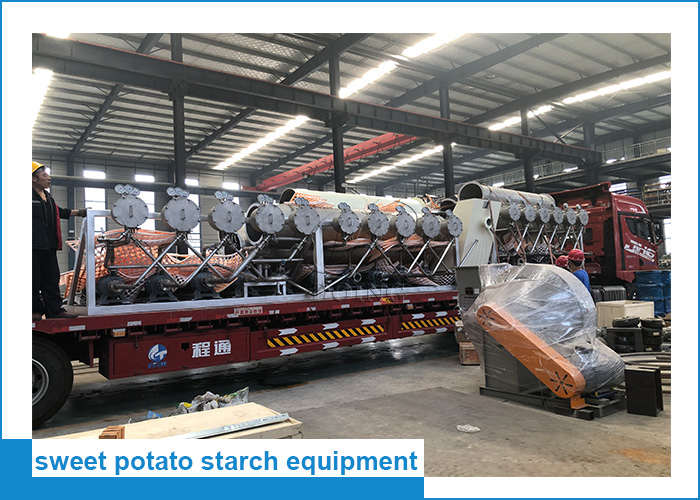 Gluten free sweet potato starch manufacturing equipment
Manufacturing gluten free sweet potato starch--the processing section
The processing section of gluten free sweet potato starch manufacturing line mainly includes the crushing part and separating part. The cleaned sweet potatoes gotten from the cleaning section will be cut into small pieces and then crushed by rasper machine because of their big size. Rasper machine have high crushing rate, which can release starch as much as possible, ensuring high starch yield. After crushing, the next is separation of impurities like fibers, sand debris, protein and cell saps. Centrifuge sieve machine is used to separate sweet potato fibers. To ensure good separation effect, 4-5 stages centrifuge sieve will be installed. And after that, the slurry will be pumped into de-sander machine for eliminating sand debris, and then to a hydrocyclone station to remove protein and cell liquids, etc. To ensure high starch yield and high purification of starch milk, 15-18 stages hydrocyclone stations will be matched.
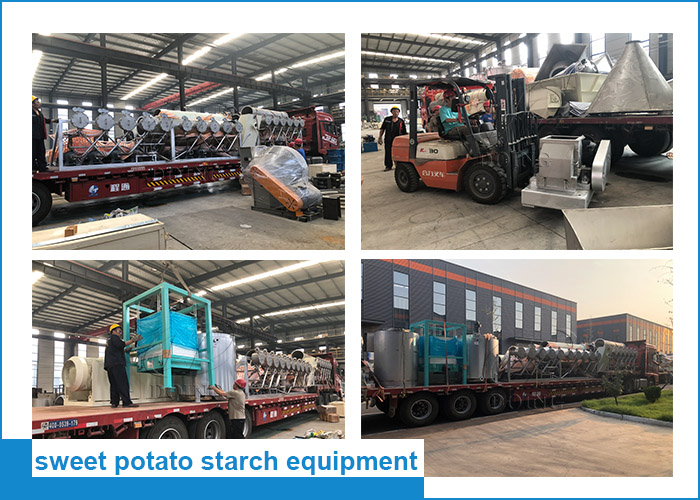 Gluten free sweet potato starch manufacturing equipment
Manufacturing gluten free sweet potato starch--the drying section
The drying section of gluten free sweet potato starch manufacturing line is to remove water and get dried starch powder. It consists of two stages: the dehydration and drying. Vacuum dehydrator is used for sweet potato starch dehydration. By the effect of vacuum pump, the output starch product has moisture content around 40%. And then, the wet starch powder will be sent into flash dryer for final drying, from which we can get dried starch with moisture around 14%. If clients have special requirement on moisture content, it can be adjusted accordingly. Normally, sieving machine will be installed after drying, to ensure fineness of sweet potato starch.
The above is a brief introduction on how to manufacture gluten free sweet potato starch. As a professional manufacturer and supplier of sweet potato starch production equipment, we, Henan Jinrui, can provide complete service from factory designing, equipment manufacturing, shipping, installation, commissioning and after sales service. If you plan to set up a gluten free sweet potato starch plant, feel free to contact us!
 Tapioca Starch Plant Upgrade: How Can I Increase Production Capacity?
Cassava Flour Milling in Thailand: Process, Equipment, and Throughput
How Many Tons of Potatoes Make 1 Ton of Starch? How to Start a Profitable Potato Starch Processing Business?
How Much Space for a 5tph Cassava Starch Processing Plant? Complete Factory Layout & Setup Guide
What Is the Market Price of Cassava Flour and Is Cassava Flour Processing Profitable?
From Fresh Cassava to Cassava Flour: A Complete Dry Process
Can cassava flour processing be a profitable alternative to wheat flour?
Is the Fufu Flour Processing Business Profitable?
Why Is the HQCF (High Quality Cassava Flour) Processing Business So Popular in Nigeria?
What Budget Is Required to Start a Cassava Flour Production Business in Congo?
Henan Jinrui Secures 2-in-1 Processing Line Project for Garri and Cassava Flour Production in Gabon
Henan Jinrui delivers attieke processing equipment to the customer in Côte d'Ivoire
Henan Jinrui Successfully Ships Cassava Flour Processing Line to Madagascar Client
Henan Jinrui Advanced Cassava Starch Processing Equipment Wins Over Nigerian Food Processor
Henan Jinrui Delivers Custom 1TPD Garri & Attieke Making Equipment to Benin
Tapioca Starch Plant Upgrade: How Can I Increase Production Capacity?
Cassava Flour Milling in Thailand: Process, Equipment, and Throughput
How Many Tons of Potatoes Make 1 Ton of Starch? How to Start a Profitable Potato Starch Processing Business?
How Much Space for a 5tph Cassava Starch Processing Plant? Complete Factory Layout & Setup Guide
What Is the Market Price of Cassava Flour and Is Cassava Flour Processing Profitable?
From Fresh Cassava to Cassava Flour: A Complete Dry Process
Can cassava flour processing be a profitable alternative to wheat flour?
Is the Fufu Flour Processing Business Profitable?
Why Is the HQCF (High Quality Cassava Flour) Processing Business So Popular in Nigeria?
What Budget Is Required to Start a Cassava Flour Production Business in Congo?
Henan Jinrui Secures 2-in-1 Processing Line Project for Garri and Cassava Flour Production in Gabon
Henan Jinrui delivers attieke processing equipment to the customer in Côte d'Ivoire
Henan Jinrui Successfully Ships Cassava Flour Processing Line to Madagascar Client
Henan Jinrui Advanced Cassava Starch Processing Equipment Wins Over Nigerian Food Processor
Henan Jinrui Delivers Custom 1TPD Garri & Attieke Making Equipment to Benin
DOING company offers cassava processing machine from single machine to the complete production line. If you want to get more details about How to manufacture gluten free sweet potato starch? , please contact us: