Tel/WhatsApp
0086 135 2661 5783

Henan Jinrui Food Engineering Co., Ltd

When you're planning a potato starch production project, one of the biggest decisions you'll face is small scale vs industrial potato starch equipment. This choice isn't just about the machine itself—it affects your investment cost, daily output, starch quality, labor needs, and long-term competitiveness.
So how do you choose between small scale and industrial potato starch equipment? Let's break it down with Henan Jinrui, the professional starch processing equipment supplier, to help you make the right selection.
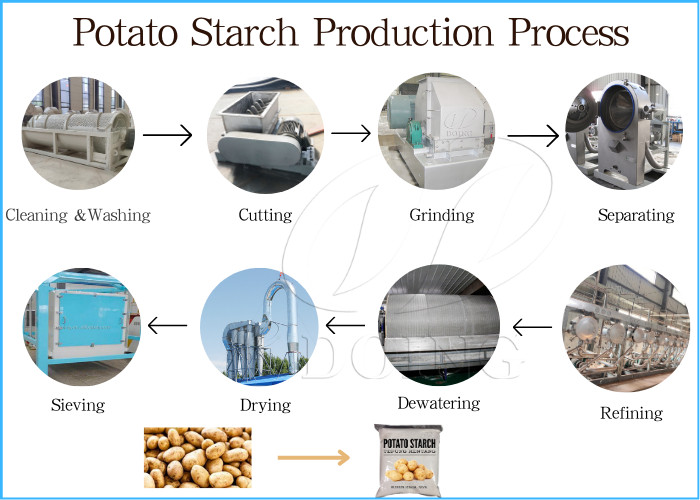 Potato starch equipment
Small scale potato starch equipment typically handles 0 to 5 tons of fresh potatoes per hour. That translates to a few tons of wet starch or under 2 tons of dry potato starch per day.
Best for: family workshops, small farms, local retail shops, small food factories, or startup trials.
Market reach: local or regional sales, no large-volume or long-distance supply needed.
Industrial potato starch equipment, on the other hand, starts at 10 tons of fresh potatoes per hour and goes up. Daily dry starch output can easily exceed 10 tons.
Best for: large starch factories, food processing companies, export-oriented production bases.
Market reach: national distribution, international trade, industrial customers (paper, textile, pharmaceutical).
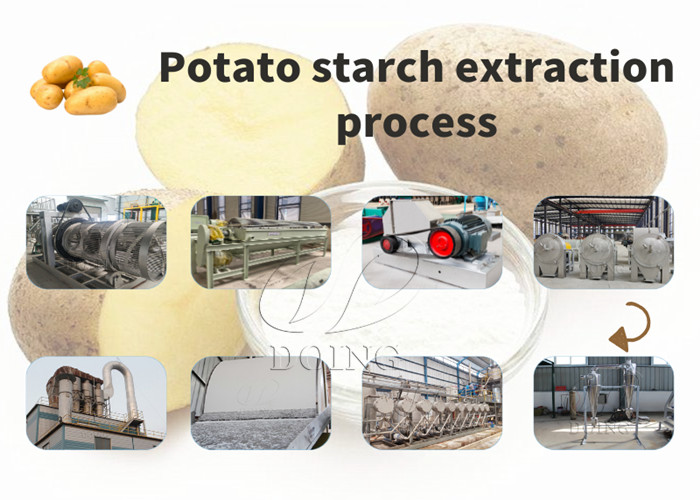 Potato starch Production line
Here's where the difference between small scale vs industrial potato starch equipment really shows up in how the line runs.
Small scale potato starch line:
Washing → crushing → residue-slurry separation → sedimentation → natural drying or small dryer
Mostly open operation, relies on sedimentation tanks
Starch extraction rate: 70%–85%
Simple structure, easy to install and operate
Industrial potato starch line:
Fully automatic closed process: automatic feeding → multi-stage washing → rasping → centrifugal sieving → desanding → hydrocyclone purification → dewatering → flash drying → packaging
Continuous production, no sedimentation waiting time
Starch extraction rate: 90%–95%
Higher whiteness, purity, and batch-to-batch consistency
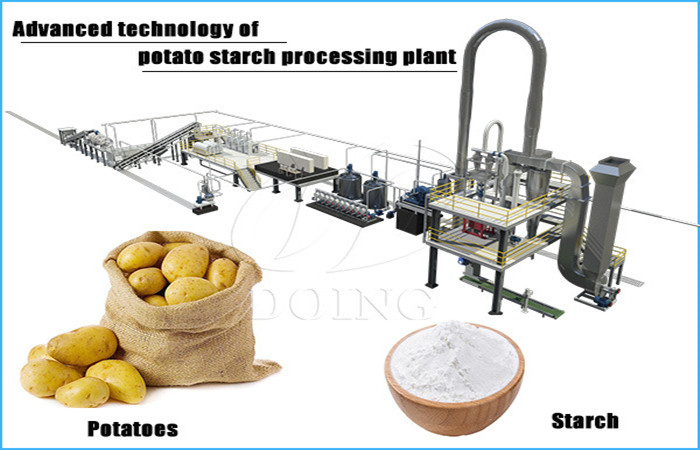 Potato starch making machine
Next, let's talk money. When you compare small scale vs industrial potato starch equipment, the cost picture looks very different.
Small scale potato starch equipment has a relatively low initial investment, which is great if your budget is tight. But keep in mind that labor costs are higher because you'll need more people to handle feeding, moving materials, and drying. The footprint is small, and you don't need complex infrastructure. Maintenance is simple and cheap.
Industrial potato starch equipment requires a much larger upfront investment—you're buying a complete production line plus supporting facilities like water, electricity, gas, and wastewater treatment. However, once it's running, labor costs are low. A few operators can monitor the PLC system. The trade-off is that maintenance is more professional and costly, and you need a large workshop area.
This is where your choice of small scale vs industrial potato starch equipment directly affects your product value.
Small scale equipment can produce basic food-grade starch. The purity, whiteness, and consistency are decent but ordinary. This starch works fine for making vermicelli, noodles, pastries, and everyday food items.
Industrial potato starch equipment, however, can produce high-purity food-grade starch, modified starch, and even pharmaceutical-grade starch. Low ash, low protein, uniform particle size, and long shelf life. That level of quality opens doors to food processing plants, export markets, and industrial applications that demand strict standards.
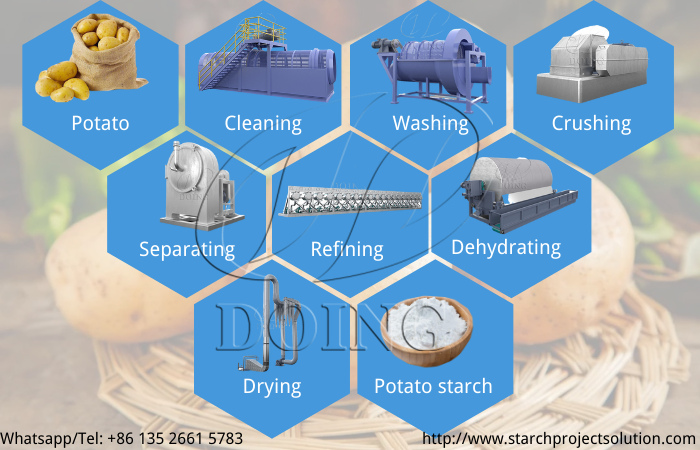 Potato starch making equipment
Still not sure how to choose? Here's a simple checklist.
Choose small scale potato starch equipment if:
Your raw potato supply is limited
Your target market is local and doesn't demand high purity
Your startup budget is small
You want a quick start with simple operation
Choose industrial potato starch equipment if:
You have stable, plentiful raw material supply
You aim for large-scale, long-term production and higher profits
You need high-quality starch for food factories, export, or industrial use
You prefer automation to reduce labor and improve efficiency
When it comes to small scale vs industrial potato starch equipment, there's no one-size-fits-all answer. Small scale gear is a solid choice for small investors and local markets—low cost, easy to run. Industrial equipment is built for large-scale, standardized, high-value production, delivering better quality and stronger long-term returns.
Your final decision should be based on your actual production capacity needs, budget, raw material supply, and target market. Still unsure how to choose? Henan Jinrui is here to help.
If you're ready to start a potato starch business and want expert advice on selecting the right equipment, feel free to contact Henan Jinrui. We'll walk you through it.
 From Fresh Cassava to Cassava Flour: A Complete Dry Process
Can cassava flour processing be a profitable alternative to wheat flour?
Is the Fufu Flour Processing Business Profitable?
Why Is the HQCF (High Quality Cassava Flour) Processing Business So Popular in Nigeria?
What Budget Is Required to Start a Cassava Flour Production Business in Congo?
What Is The Cost of Potato Starch Production Plant In India?
Cut Costs by 30% with the 2-in-1 Garri and Cassava Flour Processing Line
Small Scale vs Industrial Potato Starch Equipment: How to Choose?
High Quality Cassava Flour (HQCF) Processing Machine Price And Payback Period
Let the Data Decide: The Hardcore Longevity Report on Henan Jinrui's Cassava Rasper
Henan Jinrui Secures 2-in-1 Processing Line Project for Garri and Cassava Flour Production in Gabon
Henan Jinrui delivers attieke processing equipment to the customer in Côte d'Ivoire
Henan Jinrui Successfully Ships Cassava Flour Processing Line to Madagascar Client
Henan Jinrui Advanced Cassava Starch Processing Equipment Wins Over Nigerian Food Processor
Henan Jinrui Delivers Custom 1TPD Garri & Attieke Making Equipment to Benin
From Fresh Cassava to Cassava Flour: A Complete Dry Process
Can cassava flour processing be a profitable alternative to wheat flour?
Is the Fufu Flour Processing Business Profitable?
Why Is the HQCF (High Quality Cassava Flour) Processing Business So Popular in Nigeria?
What Budget Is Required to Start a Cassava Flour Production Business in Congo?
What Is The Cost of Potato Starch Production Plant In India?
Cut Costs by 30% with the 2-in-1 Garri and Cassava Flour Processing Line
Small Scale vs Industrial Potato Starch Equipment: How to Choose?
High Quality Cassava Flour (HQCF) Processing Machine Price And Payback Period
Let the Data Decide: The Hardcore Longevity Report on Henan Jinrui's Cassava Rasper
Henan Jinrui Secures 2-in-1 Processing Line Project for Garri and Cassava Flour Production in Gabon
Henan Jinrui delivers attieke processing equipment to the customer in Côte d'Ivoire
Henan Jinrui Successfully Ships Cassava Flour Processing Line to Madagascar Client
Henan Jinrui Advanced Cassava Starch Processing Equipment Wins Over Nigerian Food Processor
Henan Jinrui Delivers Custom 1TPD Garri & Attieke Making Equipment to Benin
DOING company offers cassava processing machine from single machine to the complete production line. If you want to get more details about Small Scale vs Industrial Potato Starch Equipment: How to Choose? , please contact us: