Tel/WhatsApp
0086 135 2661 5783

Henan Jinrui Food Engineering Co., Ltd

There are three main sections in the production of tapioca starch: washing, processing and drying. Among them, the processing section plays a decisive role in the quality of the finished tapioca starch, such as the whiteness, purity and fineness of the starch. In the tapioca starch processing process, the tapioca tubers need to be washed first, then the tapioca tubers are cut and grinded into pulp. Now in cassava pulp, there are fiber, protein, pectin and so on. So we need to separate them out and get only high quality tapioca starch. Here are three steps for separating and filtering other substances in cassava pulp.
1. Fiber separation
In tapioca starch processing, after grinding tubers, Henan Jinrui Food Company will use round sieve machine or centrifugal sieve machine to sieve pulp fibers by high rotary speed because of different proportion of fibers and starch milk. And we will match many sets sieving machines to work to ensure capacity.
2. Fine fiber separation
After the fibers are sieved, in order to avoid some fibers remaining in the starch milk, Henan Jinrui Food Company will use a fine fiber machine to separate it again to ensure the final starch purity. Similar to a centrifugal sieve, a fine fiber machine uses centrifugal force to separate out fine fibers. In this way, high-quality starch milk can be obtained.
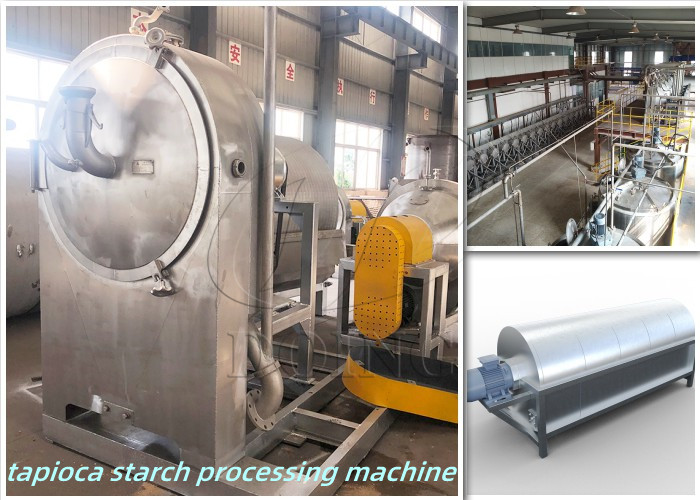 Separating equipment used to extract high quality tapioca starch
3. Concentrate and recover refined starch milk
After two sieving steps, the starch slurry will be pumped into the hydrocyclone station. In the hydrocyclone station, protein and pectin will be separated. After the starch milk is refined and concentrated, it can be dehydrated and dried to obtain dry tapioca starch.
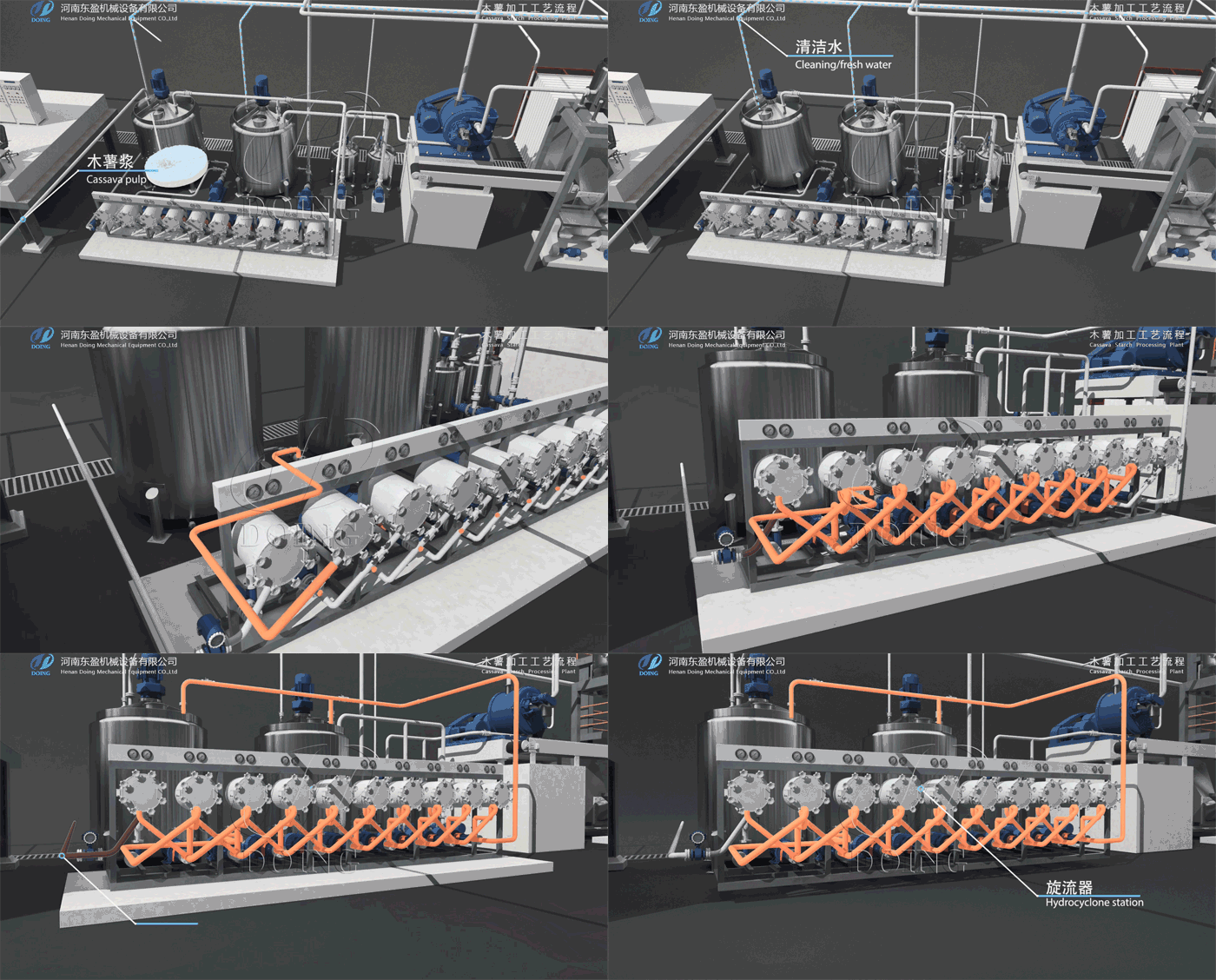 How to concentrate and refine tapioca starch
In the processing of tapioca starch, the separation of pure starch needs to go through multiple processes. If only one separator is equipped, it is impossible to produce high-quality starch. The three steps of tapioca starch separation and filtration are all to effectively and thoroughly separate other impurities in starch milk, and finally produce high-quality and high-whitetness starch for sale in the market.
If you have any technical questions in the tapioca starch production process, please contact Henan Jinrui Food Company to answer your questions.
 Cassava Flour Milling in Thailand: Process, Equipment, and Throughput
How Many Tons of Potatoes Make 1 Ton of Starch? How to Start a Profitable Potato Starch Processing Business?
How Much Space for a 5tph Cassava Starch Processing Plant? Complete Factory Layout & Setup Guide
What Is the Market Price of Cassava Flour and Is Cassava Flour Processing Profitable?
From Fresh Cassava to Cassava Flour: A Complete Dry Process
Can cassava flour processing be a profitable alternative to wheat flour?
Is the Fufu Flour Processing Business Profitable?
Why Is the HQCF (High Quality Cassava Flour) Processing Business So Popular in Nigeria?
What Budget Is Required to Start a Cassava Flour Production Business in Congo?
What Is The Cost of Potato Starch Production Plant In India?
Henan Jinrui Secures 2-in-1 Processing Line Project for Garri and Cassava Flour Production in Gabon
Henan Jinrui delivers attieke processing equipment to the customer in Côte d'Ivoire
Henan Jinrui Successfully Ships Cassava Flour Processing Line to Madagascar Client
Henan Jinrui Advanced Cassava Starch Processing Equipment Wins Over Nigerian Food Processor
Henan Jinrui Delivers Custom 1TPD Garri & Attieke Making Equipment to Benin
Cassava Flour Milling in Thailand: Process, Equipment, and Throughput
How Many Tons of Potatoes Make 1 Ton of Starch? How to Start a Profitable Potato Starch Processing Business?
How Much Space for a 5tph Cassava Starch Processing Plant? Complete Factory Layout & Setup Guide
What Is the Market Price of Cassava Flour and Is Cassava Flour Processing Profitable?
From Fresh Cassava to Cassava Flour: A Complete Dry Process
Can cassava flour processing be a profitable alternative to wheat flour?
Is the Fufu Flour Processing Business Profitable?
Why Is the HQCF (High Quality Cassava Flour) Processing Business So Popular in Nigeria?
What Budget Is Required to Start a Cassava Flour Production Business in Congo?
What Is The Cost of Potato Starch Production Plant In India?
Henan Jinrui Secures 2-in-1 Processing Line Project for Garri and Cassava Flour Production in Gabon
Henan Jinrui delivers attieke processing equipment to the customer in Côte d'Ivoire
Henan Jinrui Successfully Ships Cassava Flour Processing Line to Madagascar Client
Henan Jinrui Advanced Cassava Starch Processing Equipment Wins Over Nigerian Food Processor
Henan Jinrui Delivers Custom 1TPD Garri & Attieke Making Equipment to Benin
DOING company offers cassava processing machine from single machine to the complete production line. If you want to get more details about Three steps of separation and filtration of tapioca starch , please contact us: