Tel/WhatsApp
0086 135 2661 5783

Henan Jinrui Food Engineering Co., Ltd

Potatoes are one of the most common and most important sources of food on the earth, and rich health benefits are in it. Potato tubers contain a large amount of starch, which is the main source of energy for edible potatoes. So how to remove starch from potatoes?
Cleaning and washing is the first section of how to remove starch from potatoes, dry sieve is going to remove dirt, sand and small stones effectively, it has the ability to avoid sewage disposal. According to multiple spiral operation, paddle washing machine can remove silts and impurities from the surface of potato. This section also can be performed manually.
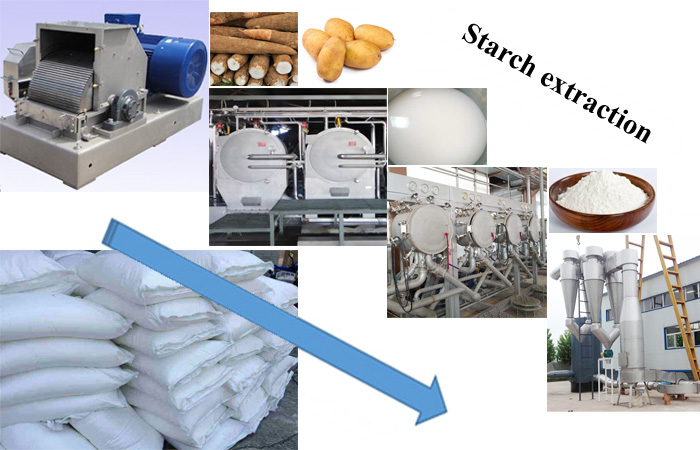 Main machines for removing potato starch
When crushed, rasper is the filing and fragmentation machine and to improve the crushing rate and extraction rate. It has the features of modern design, compact structure, high speed, high rasping coefficient. This is the second section of how to remove starch from potatoes.
For screening, starch centrifuge sieve is mainly used to separate the fiber and starch slurry. It is widely used in the extraction of potato, corn, wheat and tubers starch. The sieve basket is made of titanium plate, with laser punching processing. It has the features of low power consumption and high starch extraction rate. Fine fiber sieve can be used in the section to get rid of fine fiber in crude starch. This is the way of how to remove starch from potatoes in the screening section.
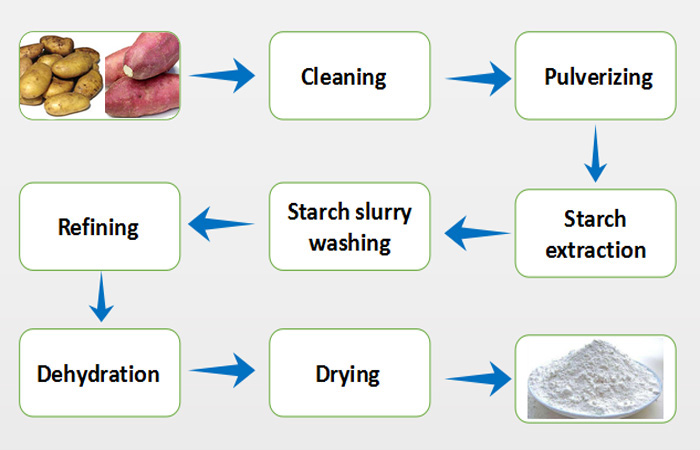 Potato starch production process
When concentrated, first, hydrocyclone station will remove fiber, protein and cell to further process starch milk. The hydrocyclone pipe made of strengthened nylon. Second, vacuum filter is a solid-liquid separation machine which is formed by vacuum pressure and vacuum filtration. It is the negative pressure formed at the outlet of filtrate as a driving force for filtration. The basic principle of vacuum dehydrator for how to remove starch from potatoes is that under the action of vacuum negative degree, the liquid in suspension is withdrawn through filter cloth, while solid particles are withheld.
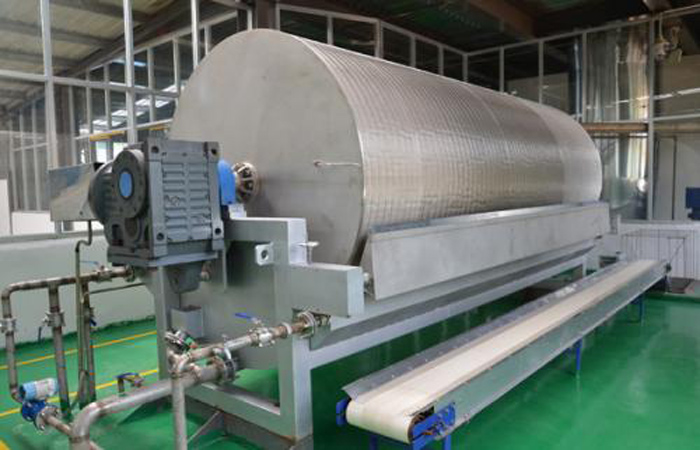 Vacuum filter
When dried, the flash dryer not only applies to various kinds of potato starch drying for how to remove starch from potatoes, but also for corn and wheat starch drying. The machine is able to reduce the loss of starch depends on negative pressure system and guarantee the high standards of final project.
When sieved, the function of starch sieve is classification the starch in accordance with the different mesh. The demand for potato starch in the international market and consumption is increasing. The total demand for potato starch is increasing year by year. It is not late to know how to remove starch from potatoes and start the potato starch making process.
All the above is the detail description of how to remove starch from potatoes.
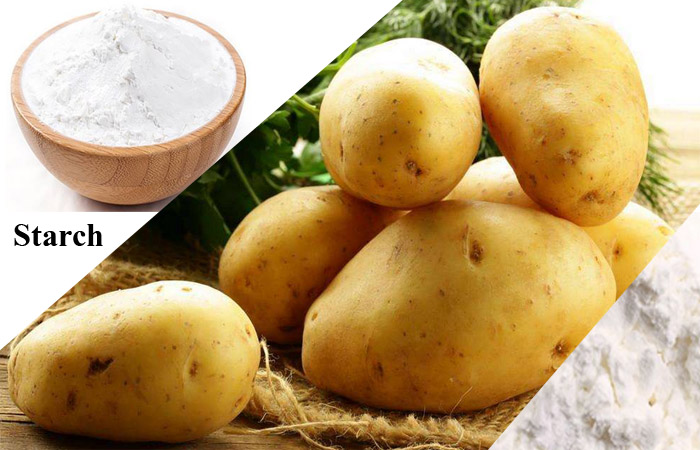 Potatoes with high starch content
Generally, the early maturing potatoes contain 11% to 14% starch, and 14% to 20% starch is found in the middle late maturing species. The tuber of the high starch varieties can reach more than 25%. The tubers also contain glucose, fructose, and sucrose.
The effectiveness of starch removing, depends primarily upon the extent to which the walls of the cells that contain starch granules are cut or ruptured. Because the potato starch granules are larger than other one and have high viscosity, the paste can be prepared with high consistency, so that the quality of potato starch granules in industrial application is much higher than others. Potato starch is mild and non irritating, so it is the best choice for food additives. Deep processing of potato with low investment, low risk and high profit can extend to business opportunities in the industrial chain. Although the investment of the process of how to remove starch from potatoes is small, the profit is huge.
 Cassava Flour Milling in Thailand: Process, Equipment, and Throughput
How Many Tons of Potatoes Make 1 Ton of Starch? How to Start a Profitable Potato Starch Processing Business?
How Much Space for a 5tph Cassava Starch Processing Plant? Complete Factory Layout & Setup Guide
What Is the Market Price of Cassava Flour and Is Cassava Flour Processing Profitable?
From Fresh Cassava to Cassava Flour: A Complete Dry Process
Can cassava flour processing be a profitable alternative to wheat flour?
Is the Fufu Flour Processing Business Profitable?
Why Is the HQCF (High Quality Cassava Flour) Processing Business So Popular in Nigeria?
What Budget Is Required to Start a Cassava Flour Production Business in Congo?
What Is The Cost of Potato Starch Production Plant In India?
Henan Jinrui Secures 2-in-1 Processing Line Project for Garri and Cassava Flour Production in Gabon
Henan Jinrui delivers attieke processing equipment to the customer in Côte d'Ivoire
Henan Jinrui Successfully Ships Cassava Flour Processing Line to Madagascar Client
Henan Jinrui Advanced Cassava Starch Processing Equipment Wins Over Nigerian Food Processor
Henan Jinrui Delivers Custom 1TPD Garri & Attieke Making Equipment to Benin
Cassava Flour Milling in Thailand: Process, Equipment, and Throughput
How Many Tons of Potatoes Make 1 Ton of Starch? How to Start a Profitable Potato Starch Processing Business?
How Much Space for a 5tph Cassava Starch Processing Plant? Complete Factory Layout & Setup Guide
What Is the Market Price of Cassava Flour and Is Cassava Flour Processing Profitable?
From Fresh Cassava to Cassava Flour: A Complete Dry Process
Can cassava flour processing be a profitable alternative to wheat flour?
Is the Fufu Flour Processing Business Profitable?
Why Is the HQCF (High Quality Cassava Flour) Processing Business So Popular in Nigeria?
What Budget Is Required to Start a Cassava Flour Production Business in Congo?
What Is The Cost of Potato Starch Production Plant In India?
Henan Jinrui Secures 2-in-1 Processing Line Project for Garri and Cassava Flour Production in Gabon
Henan Jinrui delivers attieke processing equipment to the customer in Côte d'Ivoire
Henan Jinrui Successfully Ships Cassava Flour Processing Line to Madagascar Client
Henan Jinrui Advanced Cassava Starch Processing Equipment Wins Over Nigerian Food Processor
Henan Jinrui Delivers Custom 1TPD Garri & Attieke Making Equipment to Benin
DOING company offers cassava processing machine from single machine to the complete production line. If you want to get more details about How to remove starch from potatoes ? , please contact us: